
A family meal plan does not need to be a perfect seven-day menu. It can be a small, useful answer to the question that seems to arrive every afternoon: what are we going to eat? When the week has school, work, errands, activities, and low-energy evenings in it, deciding dinner from scratch can feel like one decision too many.
This kind of plan is meant to make the next step clearer, not to make your kitchen run like a restaurant. Choose a few meals your household likes, leave room for leftovers and easy nights, then use the plan as a guide. If Tuesday’s dinner becomes Thursday’s, nothing has gone wrong. You still have a meal waiting for you.
Start with the week you actually have
Before you look for recipes, look at the calendar. Notice the late work night, the practice that ends near dinnertime, the evening someone is away, and the day you will have a little more energy. A plan that matches those real constraints is more useful than a beautiful menu that assumes every evening is wide open.
Give the week a little shape. A busy night might get a familiar 20-minute meal, soup from the freezer, breakfast for dinner, or leftovers. A calmer night can hold the recipe that takes a few more steps. The U.S. Department of Agriculture’s weekly meal-planning guidance makes the same practical point: look at what your household already has, choose meals that fit the time available, and write the plan down before shopping.
A low-pressure weekly rhythm
- Two familiar meals everyone recognizes
- One meal that uses something already in the kitchen
- One very easy or freezer-friendly option
- One night for leftovers, takeout, or a plan change
- One open space for the meal that gets moved
Check the kitchen before you make a list
A quick kitchen check prevents a meal plan from becoming a second grocery cart. Look in the refrigerator, freezer, and pantry for ingredients that are already close to becoming dinner. A bag of frozen vegetables, pasta, tortillas, canned beans, eggs, a jar of sauce, or a cooked protein can give you a starting point. You are not trying to use every ingredient. You are simply noticing what could make the week easier.
Begin with the items that need attention sooner. Build one meal around them, then let the rest of the plan be simple. This helps you buy with more purpose and gives leftovers a better chance of becoming lunch or an easy dinner instead of an overlooked container.

Choose meals by effort, not by ambition
A plan works better when it includes different levels of effort. Put one or two reliable favorites on the list first. Then add a low-effort option for the night when everyone is tired and a slightly more involved meal for the night that has room for it. This is not a rule about cooking from scratch. Frozen vegetables, bagged salad, rotisserie chicken, pasta, a slow cooker, and a simple sandwich night all count.
It can help to keep a short list of your household’s repeat meals. Think about the dishes people will actually eat and the ingredients you can find without a special trip. When you keep those ideas together, meal planning becomes choosing from familiar options rather than searching for a brand-new recipe every week.
If you are feeding people with allergies, medical needs, or a prescribed eating plan, use the guidance you have been given and choose foods that are safe for them. This guide is about organizing the week, not offering nutrition or medical advice.
Make one flexible dinner plan
Instead of assigning a strict meal to every day, write a short menu that can move. You might list tacos, baked potatoes, a sheet-pan dinner, pasta, and leftover bowls. Then place the quickest option on the busiest night and keep the others in a loose order. A flexible plan works with the way real weeks change.
Give yourself at least one backup. It could be eggs and toast, frozen soup, a pantry pasta, or a favorite takeout order. A backup is not a failure of planning. It is part of planning. It protects the plan from the unexpected meeting, the forgotten errand, or the evening when cooking needs to be the smallest possible task.

Turn the meal plan into a kinder grocery list
Once you have a few meals, write down only what is missing. Group the list in a way that makes your usual store easier to navigate: produce, pantry, dairy, freezer, and household items. Add staples only when you need them. This small step keeps the list connected to the plan instead of becoming a collection of hopeful purchases.
Plan for food storage, too. If you know you will make extra, decide whether it will become lunch, another dinner, or something to freeze. For leftovers, follow the FoodSafety.gov storage guidance and use your own judgment about what is safe to keep. A plan can be gentle without being careless.
If grocery shopping feels like a large task, split it. Make the meal plan first, then do the kitchen check later, and shop when you can. You do not have to complete every part in one sitting for the plan to help.

Let leftovers and repeat meals carry some of the week
Not every dinner needs to be new. Repeating a meal is often what makes a family meal plan sustainable. You might rotate tacos, pasta, soup, baked potatoes, breakfast for dinner, grain bowls, or a sheet-pan meal through the month. A familiar rotation cuts down on searching, shopping, and debating, while still leaving room for one new idea when you feel like trying it.
Leftovers deserve a place on the plan, too. Put a leftover night on the calendar before the week starts. If nothing is left by then, it becomes your flexible night. That one open slot lets you use what is available instead of treating every meal as an obligation you must complete on the exact day you wrote it down.
Keep the plan where dinner decisions happen
A meal plan only needs to be visible enough to be useful. Put it on the refrigerator, in a notebook, or beside the grocery list. Keep the format simple: a few dinner ideas, a note about the busy night, and one place to capture what needs to be bought. The goal is to make the next decision easier when you are tired, not to create another piece of paper to maintain.
If your meal plan is part of a larger home reset, pair it with the routines that already help you feel grounded. The weekly home reset checklist is a gentle place to gather loose ends before a new week, and the home reset checklist can help when the kitchen or entryway needs a smaller fresh start first.
Make room for the people who will eat the meals
When other people share the table, a meal plan does not have to come from one person carrying every decision. Ask a simple question while you are making the list: what sounds good this week? Children can name a familiar favorite, a partner can choose a night to cook, and anyone with a regular schedule can point out the evening that needs to be especially easy. You are collecting useful information, not holding a formal meeting.
If preferences collide, keep the plan small enough to accommodate them. A taco night can include a few different fillings. A pasta night can have sauce and toppings on the side. A grain bowl can become several slightly different bowls. It is often easier to offer choice within one simple meal than to make separate meals for everyone. Still, some nights call for the thing that works for the cook. A plan should support the whole household, including the person making dinner.
Write down the meals that went well. A short “we would happily have this again” list becomes more helpful than a long folder of recipes you never return to. After a few weeks, the plan can start with meals you already know work, leaving just one optional space for something new.
Use the fifteen-minute version when planning feels hard
You do not need a whole Sunday afternoon to make a family meal plan. Set a fifteen-minute timer and begin with only three questions: Which nights are busy? What food needs to be used first? What are three dinners we can manage? Write the answers down, then stop. Even a three-dinner plan can remove several last-minute decisions.
If you have another ten minutes later, check the kitchen and add the missing ingredients to the list. If you have more time after that, think about breakfast, lunches, or one freezer meal. Breaking the work into small parts is often more realistic than waiting for the perfect planning window. The plan can grow as you go.
The smallest useful plan
- One meal using food already at home
- One quick meal for the busiest night
- One familiar meal everyone can agree on
- One backup for when the day changes
- A short grocery list for only what is missing
Let the plan change without starting over
Real life will interrupt the menu. Someone may get home late, a child may be tired, leftovers may stretch farther than expected, or the meal you planned may simply not sound appealing that night. Move the meals around. Save the ingredients for later. Use the backup. A flexible family meal plan is successful because it gives you choices, not because it predicts every evening perfectly.
At the end of the week, take one minute to notice what helped. Maybe the busy-night meal was exactly right. Maybe you bought too much produce, or maybe the leftover night was the part that gave you the most breathing room. Keep the useful pieces and let the rest go. A plan becomes easier over time when it reflects your own routines instead of someone else’s ideal week.
Use a paper system that holds the whole week
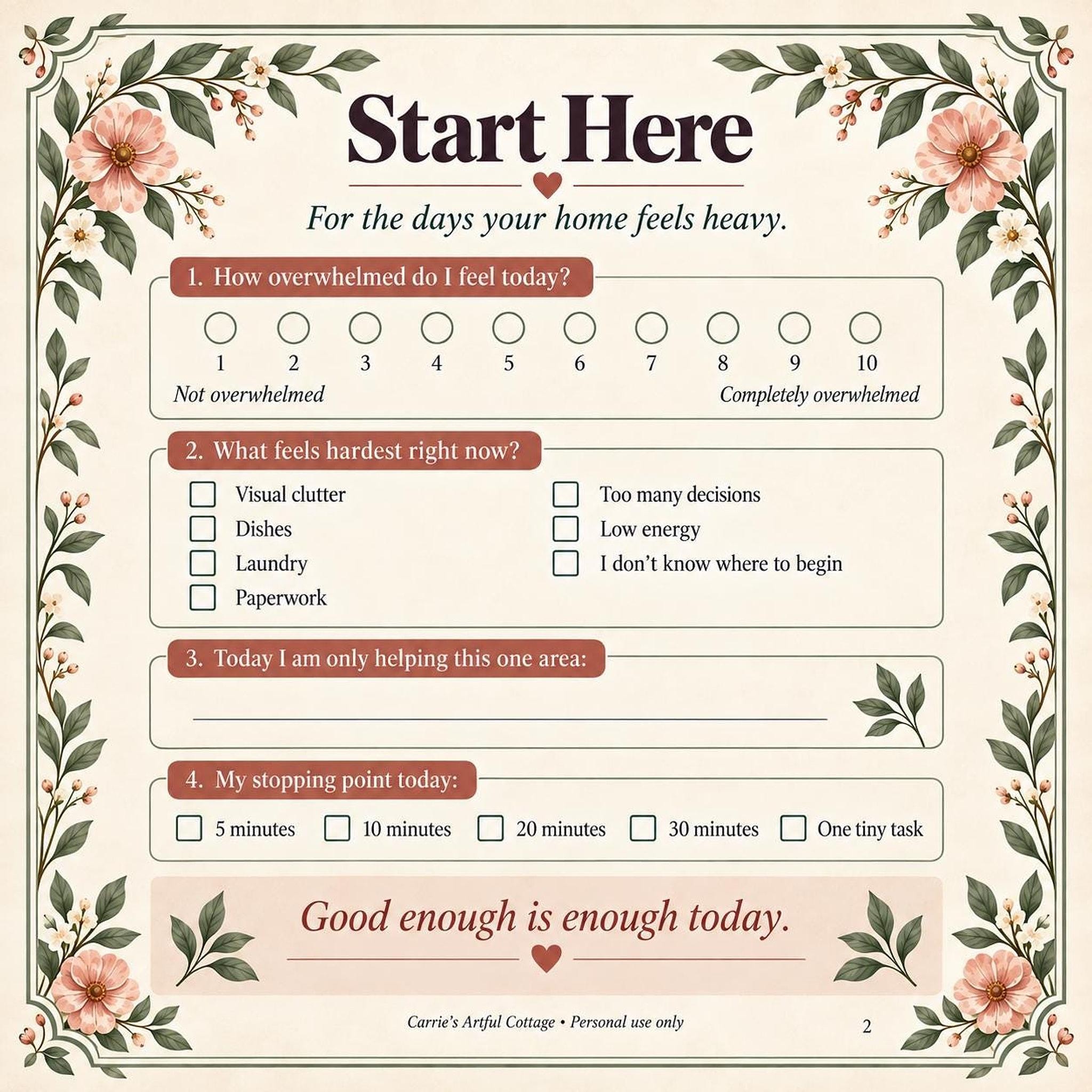
Sometimes dinner is only one part of the swirl. When you also need to see appointments, errands, supplies, laundry, and the tasks that are still open, a single place to write them down can make the plan feel less crowded. Carrie’s Artful Cottage’s Home Reset Planner includes pages for a weekly rhythm, a whole-home brain dump, and manageable next steps, so meal planning can sit beside the rest of real life instead of competing with it.
Frequently asked questions
How many meals should I put in a family meal plan?
Start with the meals you actually need. For many households, that means three to five dinners, one leftover night, and one flexible night. A plan is allowed to leave space for takeout, a busy evening, or a meal that simply moves to another day.
Do I need to plan every breakfast and lunch?
No. Planning dinners first is often enough. If mornings or lunches are the difficult part of your week, add a few easy repeat options instead of creating a detailed menu for every meal.
What if my family does not follow the plan?
Treat the plan as a set of choices, not a schedule you have failed. Move meals around, use a backup, or freeze an ingredient for another week. The useful part is having fewer decisions to make when everyone is hungry.
How can I meal plan without cooking all weekend?
Choose meals with different effort levels and prepare only what gives you relief, such as washing produce, thawing an ingredient, or writing the grocery list. Full batch cooking is optional, not a requirement.
Keep reading
Related posts

Home Routines
A Gentle Decluttering Checklist for Overwhelmed Days
A gentle decluttering checklist for clearing one small space at a time, without turning your whole day into a project.
Read the guide
Home Routines
A Weekly Home Reset Checklist for an Easier Week
A flexible weekly reset checklist for clearing the household loose ends that make a new week feel harder.
Read the guideA gentle place to begin
Make room for one helpful next step.
Use the meal plan as a simple guide, then let the rest of the week be flexible.
Explore the printable shop